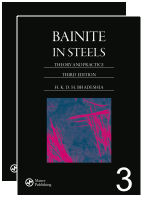

High-resolution synchrotron X-ray diffraction has been used to conduct in situ studies of the temporal evolution of phases during the isothermal growth of bainite. Two populations of austenitic material were identified: one corresponding to the initial austenite, the other to the carbon-enriched austenite associated with the bainitic ferrite. The observed lattice parameters and the asymmetry of the peaks from the residual austenite have been interpreted in terms of the carbon partitioning due to the transformation. The results are contrasted with an earlier study in which the austenite unit cell appeared to split into two distinct densities prior to the onset of transformation.
This research documentation details high-resolution synchrotron X-ray diffraction experiments conducted to monitor the formation of bainite within steel. By observing the material in real-time (in situ), scientists identified how carbon partitioning occurs between different populations of austenite and bainitic ferrite. The findings clarify how the lattice parameters of the metal evolve and challenge previous theories regarding unit cell splitting before the transformation begins. Beyond the primary scientific paper, this comprehensive archive provides technical assets documenting the thermomechanical testing and phase analysis used to capture these complex metallurgical changes:
Proceedings of the Royal Society A, Vol. 464, 2008, 1009–1027.
Download PDF file of paper.
Download associated files (30 Mb zip archive).
A short audio interview of Mathew Peet by Harry Bhadeshia, on the content of the paper.
|
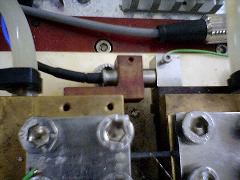
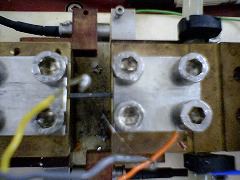 Specimen with thermocouple attached.
|
|
|
|
|
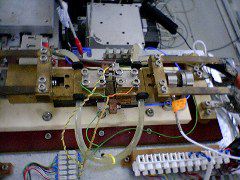
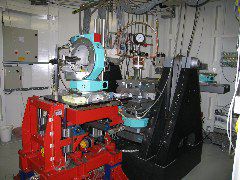
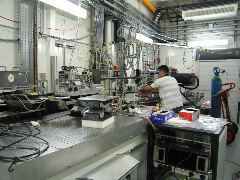
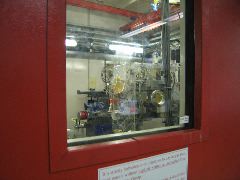
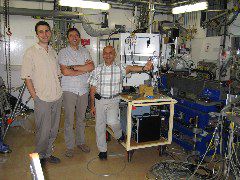
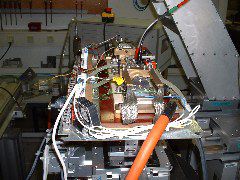 The thermomechanical simulator used in the synchrotron at ESRF
|
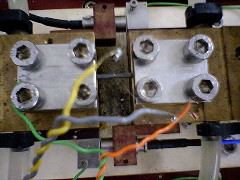
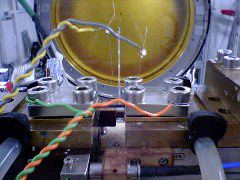
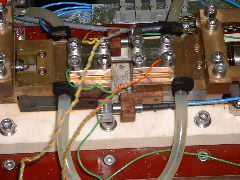
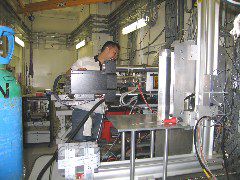
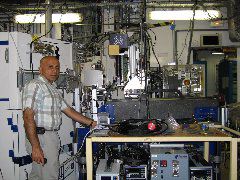
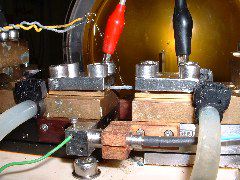 Specimen in the simulator
|
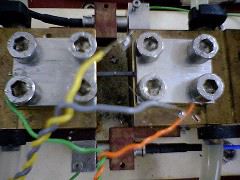
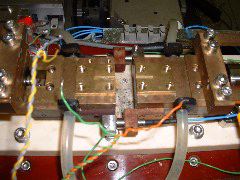 The specimen grips.
|
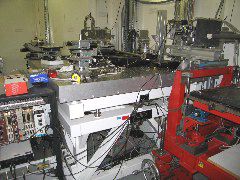
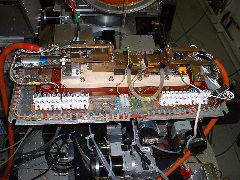 The equipment underneath allows three-axis rotations.
|
|
 |
 |
 |
 |
 |
 |
 |
 |
 |
 |
 |
 |
 |
 |
 |
 |
 |
 |
 |
 |
 |
 |
 |
 |
 |
 |
 |
 |
 |
 |
 |
 |
 |
 |
 |
 |
 |
 |
 |
 |
 |
 |
 |
 |
 |
 |
 |
 |
 |
 |
 |
 |
 |
 |
 |
 |